
How it works
Mode, poetry, improvisation
Mugham is built on a modal system: each mode (“mugham”) sets a circle of intonations and a mood. Within it the performer improvises — not arbitrarily, but by a logic mastered over years.
Mugham is inseparable from poetry: the khanende sings classical ghazals, and the music follows the meaning and feeling of the word.
Mode
The basis of mugham is the mode, which sets intonation and emotion. The main ones: Rast, Shur, Segah, Chahargah and others.
Dastgah
The large form — a chain of sections leading from a calm beginning to a climax and back.
Improvisation
Every performance is unique: the musician creates here and now, within the strict rules of the mode.
Poetry
The ghazals of Fuzuli, Nasimi and other classics — the text that leads the melody.
Emotion
The aim of mugham is a state, an experience. A good khanende leads the listener to catharsis.
Oral tradition
Mugham is not reducible to notes: it lives in the transmission from teacher to student, in memory and in breath.
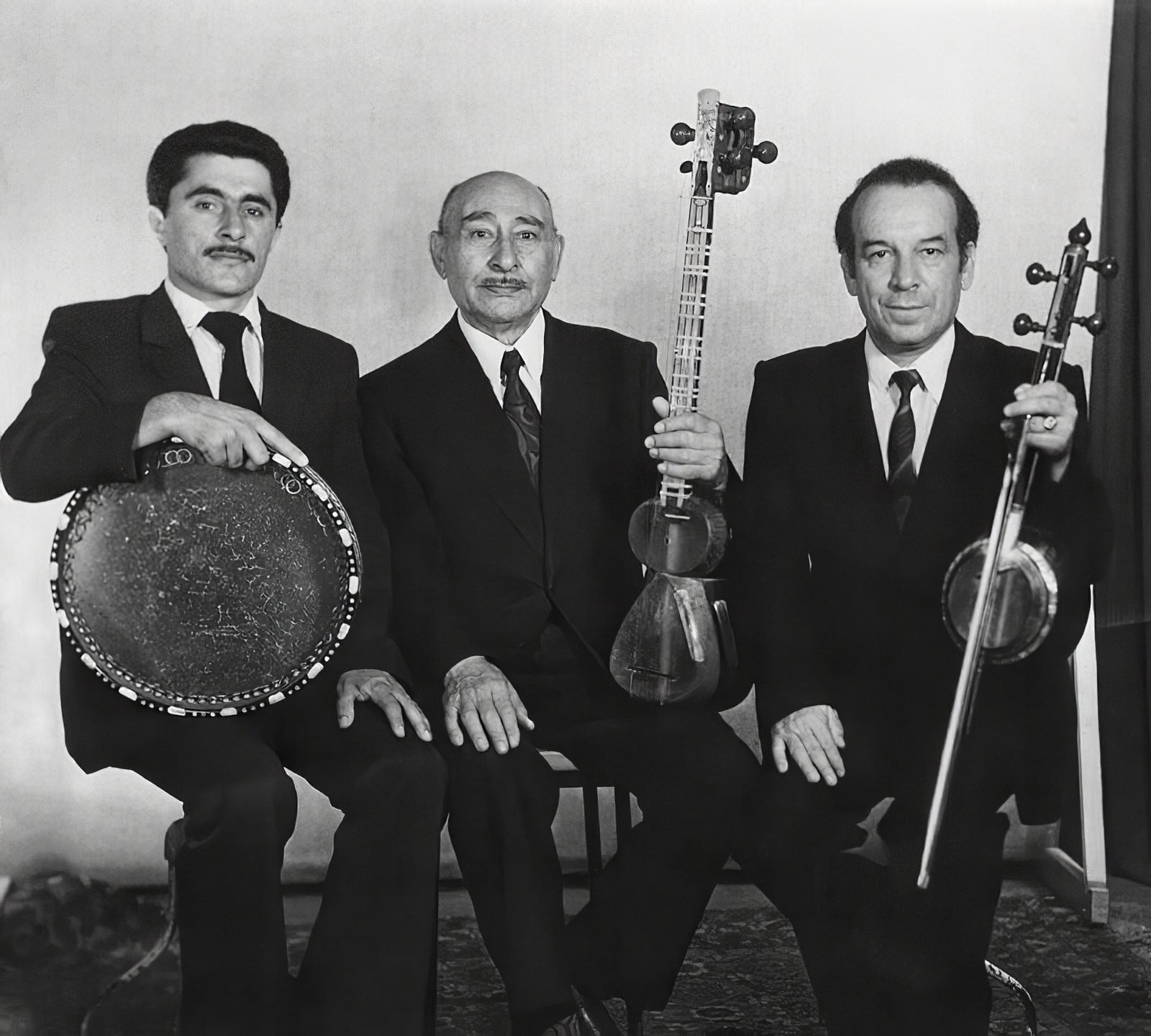
“A dastgah is an ascent: you climb the mode like a mountain path, toward the summit of feeling.”
The form of mughamSeven roads
The main dastgahs
Among the main Azerbaijani dastgahs are Rast, Shur, Segah, Chahargah, Bayati-Shiraz, Shushtar and Humayun. Each has its own character — from the majestic to the deeply sorrowful.
A connoisseur recognises the mode from the first phrases and tunes in to its emotion — as a reader knows the genre from the first lines.