The mugham trio
A voice and two strings
The classic mugham line-up is a trio: the khanende (singer), who holds a gaval, and two sazende — a tar player and a kamancha player. The voice leads, the instruments answer and support, and together they create a living fabric of sound.
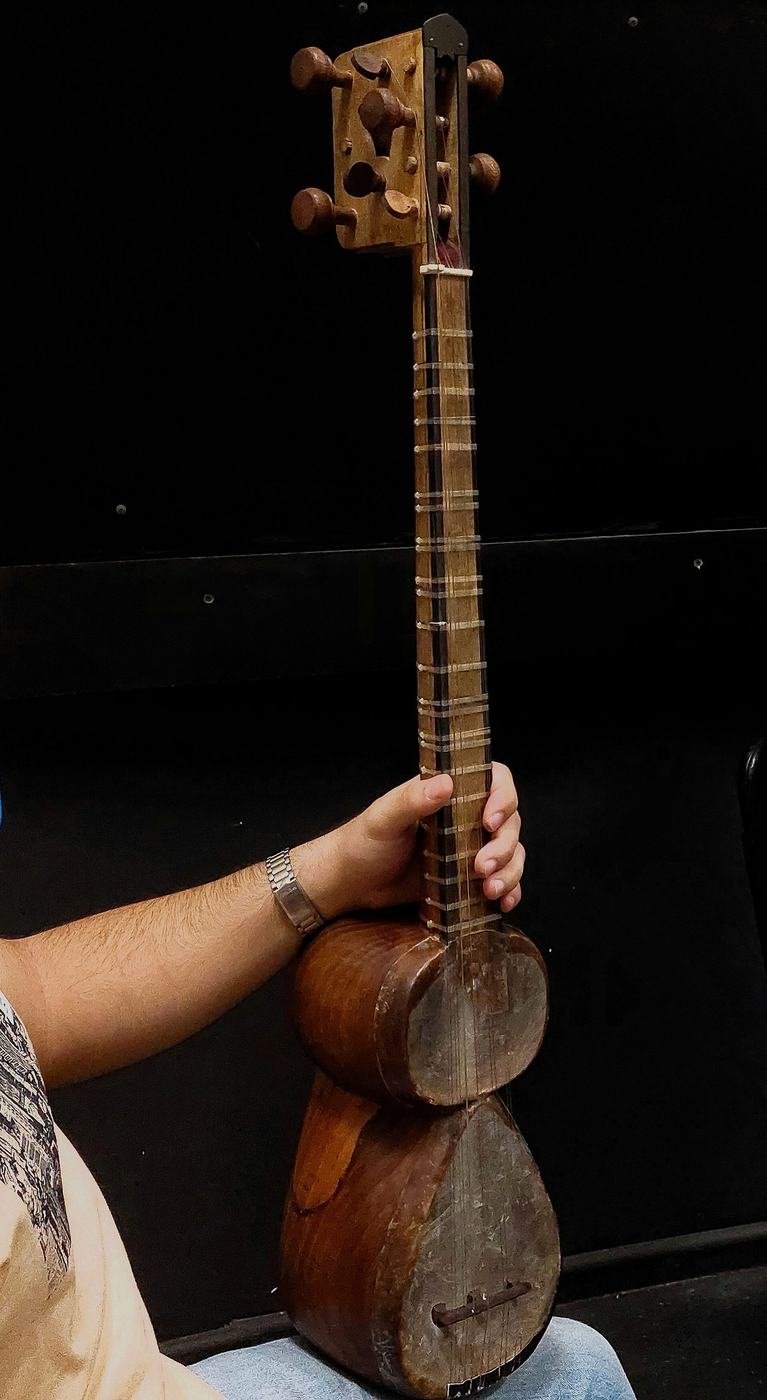
Tar
A string instrument with a double bowl and a long, singing tone. It is called the king of Azerbaijani music.
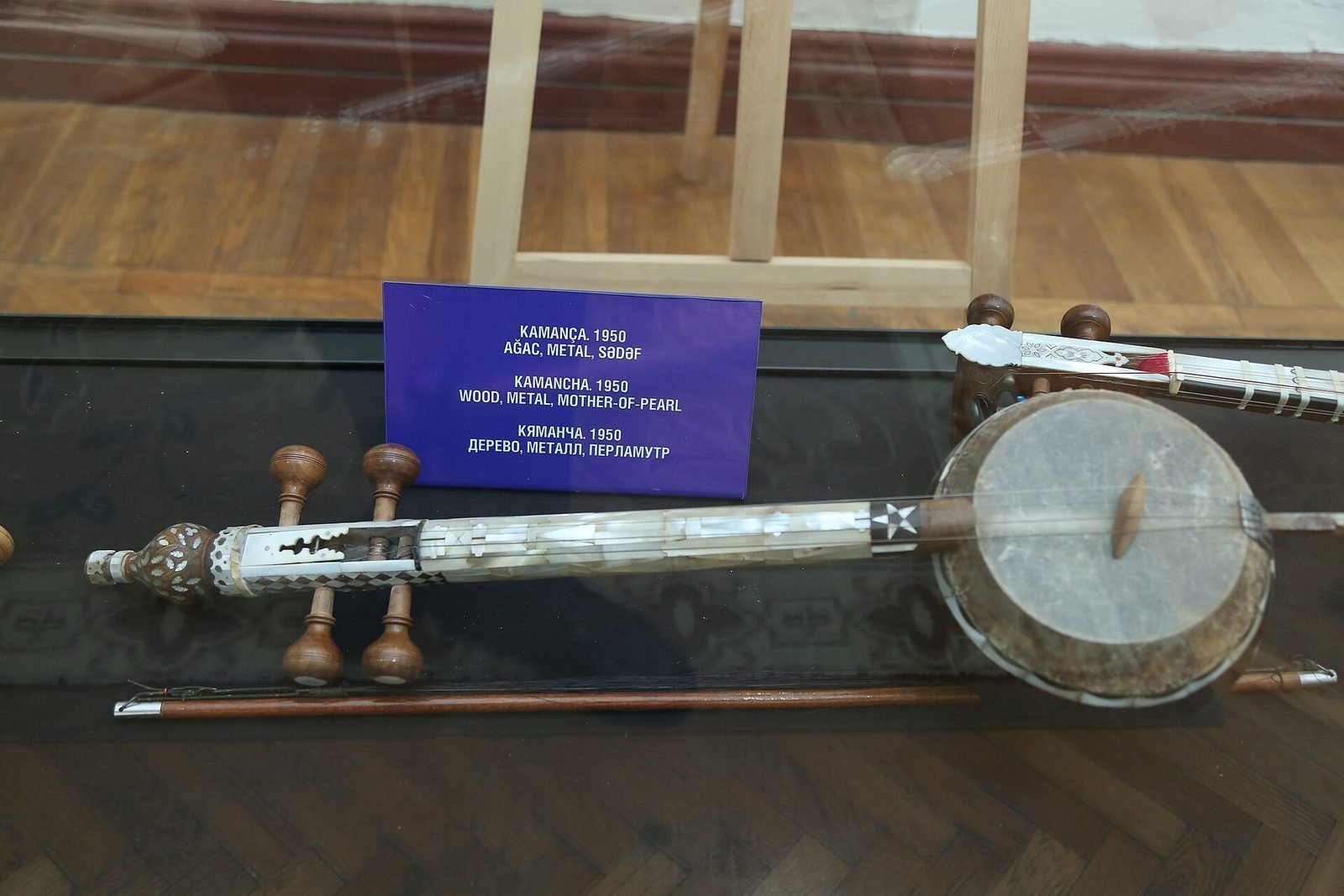
Kamancha
A bowed instrument with a round body; its warm, drawn-out voice is close to the human one.
Gaval
The frame drum in the khanende’s hands. It sets the rhythm and helps the singer build the climax.
Khanende
The improvising singer, the heart of mugham. He leads the listener through the ghazal and the emotional peaks of the mode.
Sazende
The instrumentalists — tar and kamancha players who dialogue with the voice and hold the mode.
Balaban and naghara
In folk and ensemble music, the wind balaban and the naghara drum join mugham.
 Kamancha
Singing strings
An instrument close to the voice
The kamancha sounds drawn-out and warm, almost like a human voice, which is why it perfectly complements the khanende. Tar and kamancha together form the sonic basis of mugham.
These instruments are not accompaniment in the usual sense, but equal interlocutors of the singer.